
Some time ago, Israel claimed that they had blown up an important part of Iran’s missile production line, and Iran would be in a desperate situation. Then there is the fall of the Assad regime in Syria. Many people outside wonder if Iran is finished and will give in.
In fact, it is not. Iran is just quietly preparing, accumulating strength, and holding back big moves. Because Iran has no way out. After the United States and Israel messed up the situation in Syria, Iran knew that it had become the next target.
This time Iran finally stood up.
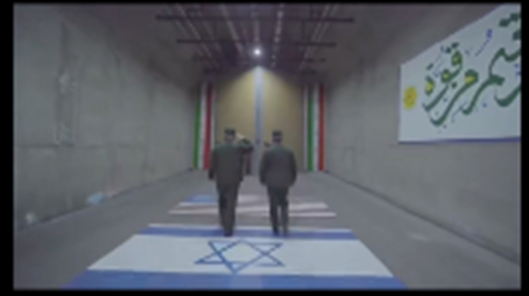
Recently, according to Iranian Tasnim News Agency, CNN and other media reports, the Islamic Revolutionary Guard Corps of Iran officially announced a new underground missile facility, which is figuratively called the “missile city”.
The announcement of this news was accompanied by a video broadcast by Iranian media, in which General Hussein Salami, commander-in-chief of the Islamic Revolutionary Guard Corps, and Brigadier General Amir Ali Hajizadeh were inspecting this huge underground military base. The video shows many details of the “missile city”, including Iran’s domestically produced medium-range ballistic missiles stored in the facility, such as “Cham” with a range of 1,000 kilometers, “Imad” with a range of 1,700 kilometers, and “Qadr” with a range of 1,950 kilometers.
Iran’s missile force has not only grown in quantity, but also has significantly improved in quality, capability and design. This statement is undoubtedly a tough response to the outside world, especially the United States and Israel.
Iran calls this new underground missile facility “missile city”. So, what does this move mean?
The “underground missile city” stores a variety of liquid-fuel missiles. The most important thing is that its area is very large, and large trucks can move freely in it, and even the convoy can’t see the end at a glance. This level of underground missile base cannot be dug out in a day or two. Moreover, when Israel’s Mossad carried out terrorist attacks in the Iranian capital, it was so rampant that it did not reveal that Iran had this military base. It can be seen how well Iran has done its confidentiality work. The images that have been made public so far only account for about 10% of the total building, which means that the number of missiles stored in Iran has exceeded thousands. The remaining 90% is confidential.
These missiles are regarded as Iran’s key strategic assets. It can be seen that Iran’s capabilities in military technology and strategic defense are constantly improving. In the current complex and changing international situation, Iran obviously hopes to enhance its defense capabilities in this way.
Iran’s announcement of the “Missile City” is not a simple military display, but also a dual consideration of politics and diplomacy.
In recent years, Iran has always maintained a high degree of vigilance under the dual pressure of international sanctions and regional conflicts. By showing a strong missile force, Iran intends to send a clear signal to the outside world: any attempt to infringe on its national interests will face severe counterattacks. This move undoubtedly adds variables to the already complex international situation.
On the same day, the volunteer army under the Iranian Islamic Revolutionary Guard Corps held a large-scale exercise in the capital Tehran. According to reports, about 110,000 members of the “Mobilization of the Poor” participated in the exercise on the 10th, aiming to demonstrate the “full readiness” of the “Mobilization of the Poor” in the face of any threat, as well as their consistency and professional skills in rescue operations, urban defense and counter-terrorism operations.
So why did Iran choose to conduct such an exercise at this time and show its missile arsenal? The most fundamental reason is that Iran feels threatened. Gaza was destroyed, Hezbollah was seriously injured, Syria changed overnight, and Iran’s arc of resistance, which took decades to build, was almost disintegrated in just a few years. Its position as the big brother in the Middle East can no longer be maintained, because its younger brothers and wings have been slowly cut off by Israel and the United States.
These armed organizations and countries, which were originally regarded as Iran’s allies, have now fallen in front of Iran one by one, which has brought great pressure and challenges to Iran. With the rise of the Trump administration and its tough attitude towards Iran’s policy, the rift between the United States and Iran has deepened further. What’s more, Trump is a vengeful person, so Trump will definitely not let Iran go. This is also what Iran fears the most. After all, everyone knows that Trump dares to do anything crazy.
Now the only active ones are the Houthis in Yemen. In the past few months, the Houthis have been firing at full power, using hypersonic missiles and drones to attack Israel and the US Navy’s aircraft carrier battle group almost every day. On January 1, 2025, the Houthis shot down the MQ-9 “Reaper” drone, which is the 14th since 2023. On January 5, the Houthis used the “Palestine-2” hypersonic ballistic missile to successfully hit a power station in Haifa, Israel. On January 11, the Houthis announced that the organization used cruise missiles and drones to launch a 9-hour attack on the US Navy’s “Truman” aircraft carrier fighter. This is the fifth time that the Houthis have successfully repelled the US Navy’s aircraft carrier battle group. So I have to say that the Houthis are really too fierce. Otherwise, the Americans would not want to negotiate with the Houthis.
Iran’s recent intensive display of military strength is in response to the threat of a US-Israel strike, and it has chosen to deter the United States and Israel in a tit-for-tat, eye-for-an-eye manner. Iran has strong missile capabilities in the Middle East and has a large variety and number of missiles, which gives it a certain advantage in confronting the United States and Israel.
Iran’s announcement of the “missile city” may further exacerbate military tensions in the region. Israel and other countries may be highly vigilant of Iran’s move, and may even take some further measures such as adjusting military deployments. The military balance in the region may be broken, and there is a risk of triggering a new round of arms race. From an international perspective, this incident has attracted global attention. The United States and other Western countries may reassess Iran’s military threat and may also adjust their policies toward Iran. Some countries that have cooperative or interest relations with Iran will also re-examine their relations with Iran and consider how to safeguard their own interests in the changing regional situation. For other countries in the Middle East, Iran’s announcement of the “missile city” will also affect their diplomatic and military policies. They need to find a balance between Iran and other major powers to ensure their own security and interests.
With the joint efforts of the international community, the appearance of Iran’s “missile city” can become an important opportunity to promote regional peace and development. In the future, how all parties respond to this incident and how the regional and international situation will evolve deserves continued attention.