
On April 21, India, the world’s second largest crude steel producer, did something “coincidental”.
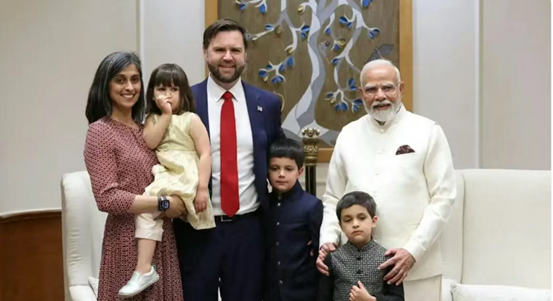
On the day when US Vice President Vance visited New Delhi, the Modi government suddenly announced a temporary tariff of 12% on some imported steel, which will be valid for 200 days.
As soon as the news came out, the global steel market was instantly rippled: Chinese steel companies smiled helplessly, India’s downstream industries secretly complained, and even Wall Street analysts in the United States couldn’t help but joked: “Is Modi submitting a letter of surrender to Trump?”
In this regard, the reason given by the Indian government is high-sounding: this is to protect domestic steel companies from the “cheap Chinese steel impact” and ensure fair competition in the market.
But when you open the data account book, this statement is like a layer of window paper that will break with a poke.
In fiscal years 2024 and 25, India’s steel imports from China soared to 9.5 million tons, a nine-year high, accounting for 21% of India’s total imports, making China India’s second largest source of steel imports.
What’s even more embarrassing is that this self-proclaimed “steel power” has become a net importer of finished steel for two consecutive years. After all, its own production is not enough, so of course it has to buy from all over the world!
Now it has imposed tariffs on major import sources, which is a bit like eating with a bowl in hand and cursing when the bowl is put down.
The root cause of India’s large-scale import of finished steel lies in India itself.
Friends who often go to Indian steel mills know that many of the production lines there are still old equipment from the 1980s and 1990s, with high energy consumption and pollution. The production cost per ton of steel is $50 higher than that of Chinese counterparts. The average capacity utilization rate of India as a whole is less than 70%, while Chinese steel companies are generally above 85%.
The technology is even worse than ours: the number of Chinese steel patents is 8 times that of India, and even the R&D investment of Chinese companies in special steel is 3.5 times that of India.
To put it bluntly, Indian local companies are not “cheap” but “high quality and low price”. For the same grade of rebar, Chinese products have higher strength, fewer impurities, and are 10% cheaper. Why don’t downstream companies buy them?
Anyone with a discerning eye can see that India’s operation reveals a strong “American style”. Does Trump sneeze and India has to catch a cold? This follow-up drama is really stupid.
Since the Trump administration imposed a 25% tariff on imported steel and aluminum last year, global trade protectionism has opened Pandora’s box. The European Union immediately announced a 15% reduction in steel import quotas, South Korea imposed an anti-dumping duty of up to 38% on Chinese thick plates, and Vietnam also followed suit to conduct anti-dumping investigations.
India can no longer sit still. On the one hand, it is afraid that the American “big brother” will feel that it is not loyal enough. After all, Trump has been using the tariff stick to hit India and force it to make concessions in trade negotiations. On the other hand, the domestic steel industry can no longer hold on. The industry debt ratio of 68% has made small and medium-sized enterprises breathless. If no protective measures are taken, they may be out of business collectively.
But the cost of following the trend is not small. Indian Steel Minister Kumaraswamy claimed that this move can buy time for local companies to upgrade. But everyone in the industry knows that protectionism is like a painkiller, which can only relieve pain temporarily but cannot cure the root cause.
Ten years ago, Brazil imposed high tariffs to protect its local automobile industry. As a result, local car companies slept in the policy hotbed, and their technology did not improve for ten years. In the end, they were easily harvested by foreign car companies.
Today, India’s situation is exactly the same as Brazil’s: local steel companies’ R&D investment accounts for less than 1%, but they hope that after blocking Chinese goods with tariffs, market share will automatically come to them.
What’s even more ironic is that India’s downstream industries, such as the construction industry and the automobile manufacturing industry, have become the biggest victims. The cost of importing one ton of steel from China has increased by 12%. The cost of a building will cost hundreds of thousands of rupees more, and the cost of each car for automobile manufacturers will increase by $200. In the end, consumers still pay the bill.
Faced with India’s tariff stick, Chinese steel companies seem very calm. Why?
First, the Indian market accounts for less than 9% of China’s total steel exports, and the impact is limited; second, China has long been planning a “diversified breakthrough”.
You don’t let me sell ordinary steel? Then I will sell high-value-added special steel: Baowu Group produces “pen steel” and “aircraft carrier steel”. The number of countries in the world that can do it can be counted on one hand. Even if India increases taxes, it has to buy it with a pinch of the nose.
You, India, close the market? There are bigger cakes in Southeast Asia and Africa. After the opening of the China-Laos Railway, Yunnan Steel will directly supply Laos’ infrastructure projects through railways. Hesteel Group’s iron ore project in Africa is about to be put into production, forming a “mining-smelting-processing” full industrial chain, bypassing trade barriers easily.
What’s more interesting is that India is raising tariffs on Chinese steel, while quietly relaxing China’s investment restrictions in the electronics and pharmaceutical sectors.
This “want both” mentality exposes its anxiety in the Sino-US game.
But can our family accept your tricks? Since you are protectionist, I will suspend investment in Indian steel projects and increase the layout in Southeast Asia instead.
Baowu Group has signed an agreement with Malaysia to jointly build a green steel industrial park and use clean energy to make steel, and is not afraid of even the EU’s carbon tariffs. The Ministry of Commerce has directly stated that it opposes any protectionist measures that abuse tariffs. China has countermeasures in the fields of pharmaceutical intermediates, electronic chips, etc.
Looking further, India’s wave of operations is just a small wave in the wave of global trade protectionism.
In recent years, the Trump administration has pursued the “America First” policy, and has not hesitated to cut even its allies. Last year, it imposed a 10% tariff on Canadian aluminum products, causing chaos in the North American industrial chain; the European Union, in the name of “carbon neutrality”, plans to impose carbon tariffs on imported steel, which is actually building green trade barriers.
These practices seem to protect local industries, but in fact they are dismantling the global industrial chain.
To give the most intuitive example, in the first quarter of 2025, international steel prices rose by 14% year-on-year, India’s infrastructure costs increased by US$2.3 billion, American consumers spent an extra US$500 to buy a car, and the EU’s new energy vehicle project had to be postponed due to the increase in steel prices.
To put it bluntly, the tariff stick will eventually fall on ordinary people.
History has proved countless times that trade protectionism is a dead end.
In 1930, the US Congress passed the Smoot-Hawley Tariff Act, which imposed tariffs on more than 20,000 commodities, resulting in a global trade war, a 66% drop in international trade volume, and the Great Depression.
What Trump and Modi are doing now is just repeating the same mistakes.
What’s even more ridiculous is that India didn’t even copy the homework: the US tax increase is because of the dollar hegemony. Even if the import cost rises, it can still let the world pay by raising interest rates.
But what about India? The rupee exchange rate has been depreciating all the way, and the foreign exchange reserves are only 500 billion US dollars. It has to subsidize local enterprises with real money. Isn’t this just swell up your face and fill your belly?
Standing on the streets of India, looking at the Chinese-made motorcycles running all over the streets and the Chinese steel on the construction sites, I suddenly feel that the tariff policy of the Modi government is a bit “magical”.
While enjoying the convenience brought by Chinese goods, they want to shut out Chinese companies. This contradictory mentality is essentially a lack of confidence in the competitiveness of their own industries.
Just like two neighbors in the village, one family is thinking about how to strengthen the courtyard wall every day, for fear that others will steal their crops; the other family is busy building roads and bridges and doing business with more people. Over time, who will live better? The answer is self-evident.
There is an old Chinese saying that goes, “A good ironsmith must be strong himself.”
The problem of India’s steel industry is not the high or low tariffs, but whether it has the courage to scrape the bone to cure the poison, eliminate backward production capacity, increase technological research and development, and improve the business environment.
Relying on tariffs to protect backward production capacity is like giving patients hormones. It looks good in the short term, but it will only make the condition worse in the long run. As for the Trump administration, instead of being busy making enemies everywhere, it is better to think about how to solve the problems of high domestic inflation and industrial hollowing out.
After all, even American farmers know that the subsidies from the trade war are far less reliable than the money earned from normal exports.
Behind this steel game is another collision between globalization and protectionism.
When India is busy building walls, China is paving the way; when the United States is obsessed with “withdrawing from the group”, China is actively promoting the implementation of RCEP and the China-EU Investment Agreement.
History will eventually prove that openness brings progress and closure leads to backwardness. This is an irrefutable truth.
As for those who are obsessed with the tariff game, perhaps they should listen to the complaints of the Indian people: “Steel is expensive, houses are unaffordable, who is the government protecting?”