
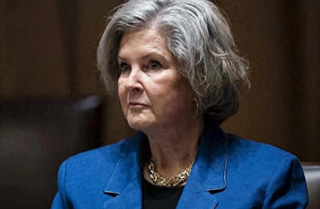
The Trump team is still “working hard” to prove to the world that they are just a huge “grassroots team”. After the “group chat gate” incident, the Trump team has once again overturned the car on the “security” issue.
On May 30, local time, the Federal Bureau of Investigation (FBI) launched an investigation into the “hacked” mobile phone of Wiles, one of the advisers of US President Trump and the director of the White House Office.
Earlier, according to a report by the Wall Street Journal on May 29, Wiles’ private mobile phone was “hacked”. The “fake Wiles” obtained the mobile phone address book and called or sent messages to federal senators, governors of several states, executives of large companies and other celebrities in recent weeks.
Wiles is the first female director of the White House Office and one of Trump’s longest-serving advisers. When Trump first ran for the US presidency in 2016, Wiles helped him win Florida; after Trump failed to be re-elected in 2020, Wiles has been by his side as his chief of staff; in the 2024 presidential election, Wiles served as Trump’s campaign manager.
It can be seen that Wiles can be regarded as an “old acquaintance” around Trump with rich political experience. But it is ironic that Wiles, who has “political experience”, actually uses his private mobile phone to handle public affairs; however, the behavior of this “old acquaintance” does maintain the consistent style of the “grassroots team”.
Funny and reasonable is that after the incident, Wiles did not “go crazy” at all, but was calmer than expected, and even took the initiative to do “case analysis”.
A senior White House official told a reporter from the Wall Street Journal that Wiles told other members of the Trump administration that she suspected that hackers had stolen the address book of her private mobile phone because the “fake Wiles” only selected well-known people to contact.
Many people who received calls or messages found that the incoming number was not Wiles’s mobile number, so they asked the White House to verify whether Wiles had really contacted them, and the whole story was found out.
Wiles not only did not worry about whether there was any data leakage, but he did not even notice it at all. If it were not for the “active verification” of other staff members, this matter might have continued to trample on the safe “border line” of the United States for a while.
As the “instigator”, Wiles even “urged” the contacts in her address book to ignore this information. Because the “fake Wiles” kept sending messages and making calls, some White House advisers joked privately that the impersonator seemed very busy. It seems that everyone has become accustomed to the issue of communication security.
The official who broke the news did not disclose who the “fake Wiles” contacted, but said that the contacts were basically politicians and corporate executives. The report said that some people who received the call reported that the voice on the phone sounded like Wiles, and it could not be ruled out whether it was generated by artificial intelligence; in addition, the impostor’s grammar was poor, and the information was more formal than Wiles’ usual communication style.
As Trump’s “right-hand man” and a key government official, he was exposed by the media for his “poor grammar”. This “slap” hit everyone in Trump’s team hard.
More importantly, non-official personnel can call at will, and even artificial intelligence cannot distinguish. Obviously, Wiles is just the one who was “exposed”. There are many American officials who use private mobile phones, and whether the US security system is really safe should also be questioned.
Trump’s men are already “habitual offenders”. On April 2, the US “Politico” news network reported that in addition to the group that the “Atlantic Monthly” reporter was pulled into, the team of Waltz, the US President’s Assistant for National Security Affairs, pulled at least 20 groups on the social software “Signal”, involving a lot of sensitive information.
On April 20, internal records reviewed by The Washington Post showed that US government officials improperly shared sensitive documents with federal staff, including the White House floor plan that may be confidential.
The Guardian reported that Waltz, who was fired on May 1 for the “group chat scandal”, was photographed using a “copycat” Signal communication software and communicating with several senior US government officials at a cabinet meeting on April 30.
The report said that the security of this software is even lower than that of Signal, the communication application involved in the major US national security scandal last month. The successive security issues seem to have become the “basic operation” of the Trump team.
Perhaps he is used to the team’s operations, or he may not care at all. On May 30, Trump told reporters that he thought Wiles was a “great woman” and “she could handle it.” “They hacked into her phone and they tried to pretend to be her,” he said. “No one can pretend to be her. She is the one and only Wiles.”
Trump said a lot, but it was the same as saying nothing. He ignored Wiles and the White House, but instead defended his men calmly and put all the blame on the “fake Wiles”.
FBI Director Patel also said hypocritically: “The FBI takes all threats to the president, his staff, and our network security very seriously. It is our top priority to ensure the secure communication capabilities of our government officials to complete the president’s mission.”
This statement is really hilarious. Since we have to “ensure the secure communication of government officials”, why do similar problems still occur? Doesn’t the United States rely on itself for communication security, but on problems to “remind” it?
Even if their own family is in chaos, Americans still have extra thoughts to meddle in other people’s affairs. On May 31, US Secretary of Defense Hegseth “replayed the old tune” at the Shangri-La Dialogue in Singapore, and once again frantically exaggerated the “China threat”, claiming that China “intends to change the balance of power in the region by force” and interfere with regional security.
Not to mention the security threats that the United States has provoked in recent years by inciting the conflict between Russia and Ukraine and launching a tariff war, now that the United States’ own backyard is “on fire”, it is really absurd to still say that others “interfere with regional security”.
The endless stream of U.S. communications security incidents has once again confirmed the Trump administration’s “grassroots” nature. While countries around the world are shocked, Americans themselves are calm as usual. The Trump administration is obviously “brainless” for not caring about communications security.