
As global attention focused on the US-Russia summit in Alaska, an accidentally leaked eight-page confidential document tore open the curtain on the diplomatic arena.
According to an exclusive report by National Public Radio (NPR) on the 16th, confidential documents bearing the US State Department logo were found on a printer at an Anchorage hotel on the morning of the 15th.
Concealed within these eight pages were sensitive, undisclosed details of the meeting between the two presidents.
These documents, suspected to have been accidentally left behind by US personnel, not only revealed details of the “Bald Eagle Statue” presented by Trump to Putin, but also exposed the menu of the unheld luncheon and the minute-by-minute meeting schedule.
The incident occurred at the Captain Cook Hotel, just a 20-minute drive from the meeting venue, Joint Base Elmendorf-Richardson.
Three guests in the four-star hotel’s business center stumbled upon the documents while using a public printer around 9:00 a.m. on the 15th. The documents were discovered at a critical time before the summit began. One of the individuals secretly took photos and submitted them to NPR, but for fear of causing trouble, refused to reveal their identity.
The photos taken by the anonymous witness show that the document’s header clearly states “Confidential,” and the content contains the specific arrangements for the meeting.
The document details the August 15th summit in incredible detail, even specifying which conference room at the joint military base would be used.
Even more surprisingly, Trump’s intended gift for Putin—a tabletop sculpture in the shape of an American bald eagle—is also listed.
Pages two through five reveal even more astonishing content.
Not only are the names of 13 US and Russian dignitaries listed, but the phone numbers of three US staff members are also included.
Perhaps to avoid embarrassing mispronunciations, the document even includes pronunciation instructions for Russian personnel; for example, Putin’s name is written as “POO-tihn.”
The leaked document contains Level 3 sensitive information, and every page exposes a critical flaw in the US security system. At the strategic level, the document precisely identifies the coordinates of a conference room within the military base and even reveals details of a “bald eagle table ornament” diplomatic gift that Trump planned to give to Putin—information typically classified at the highest level of confidentiality.
The operational level is even more shocking.
The full list of 13 US and Russian dignitaries attending the meeting includes the unencrypted phone numbers of three US staff members.
Even more absurdly, the document includes pronunciation guidelines for Russian names, such as calling Putin “POO-tihn.” Such basic errors are rare in confidential diplomatic documents.
The leaks of security details are equally shocking.
Pages six and seven detail a luncheon that didn’t take place.
Originally, the menu for this banquet, prepared in the name of “His Excellency Vladimir Putin,” was set: a green salad to start, followed by a main course of Olympian flounder with filet mignon, and a crème brûlée to finish. The seating chart was clearly drawn:
To Trump’s right sat Secretary of State Rubio and Middle East envoy Witkov.
Next to Putin sat Foreign Minister Lavrov and Presidential Aide Ushakov, the two sitting opposite each other.
From the menu featuring a green salad with flounder to the precise seating arrangement of Trump and Putin, these details, which should have been carefully guarded, are now readily available to hotel guests on printed documents.
Faced with the public outcry, White House Deputy Press Secretary Anna Kelly attempted to downplay the incident, insisting it was “just a lunch menu” and that no security regulations had been violated.
However, this response failed to completely allay public concerns.
Why would a lunch menu be marked as confidential, and why would it appear on a public printer in a hotel just a 20-minute drive from the venue for the US-Russia summit?
Was it a technical glitch or human error?
If it was just a regular lunch menu, as the White House claimed, then why was such a detailed meeting schedule and sensitive information, including the contact information of political leaders, associated with it? First, documents bearing the official State Department logo automatically trigger the encryption requirements of Chapter 17 of the Confidential Information Handling Manual, which fundamentally conflicts with the practice of freely printing on public printers.
Second, the disclosure of diplomats’ mobile phone numbers directly violates the Regulations on the Protection of Personal Information of Diplomatic Personnel. The 2016 incident involving a sonic attack on US diplomats in Russia serves as a cautionary tale.
The unique geographical location further highlights the severity of the incident.
The Captain Cook Hotel is only a 20-minute drive from a military base and, according to the Regulations on the Management of Special Security Areas, should be subject to a TS/SCI-level confidentiality agreement.
UCLA Law Professor Michaels pointedly pointed out, “This further demonstrates the current administration’s carelessness and incompetence. Confidential documents should never be left in public printers.”
This incident is not an isolated one.
In March 2025, a confidential group discussing Yemeni military strikes mistakenly added a journalist; in July of the same year, unrelated individuals infiltrated an ICE fugitive manhunt group chat; combined with this incident of diplomats’ illegal use of public printers, this creates a “triple gate” of security management. The “Standards for the Use of Diplomatic Equipment” clearly stipulates that the handling of confidential information must be done with certified, dedicated equipment; the use of public printers constitutes a major violation.
Compared to the Obama administration’s handling of the “emailgate” incident, the current administration lacks the 72-hour timeframe for launching an investigation. The State Department and the White House have offered conflicting statements, and the individuals involved have not been suspended as required.
This lax approach mirrors the “secret conversation record controversy” at the 2018 Helsinki Summit, exposing a failure of institutional oversight.
However, is this truly just a security breach?
The meticulous annotations of Russian personnel’s pronunciation in the documents and the unusual shifts in the tanker’s route suggest a more complex transactional logic behind this “show confrontation.”
The flounder menu with green salad and the bald eagle gift in the leaked documents stand in stark contrast to the tough public statements from both sides.
Trump issued an “ultimatum” to Russia before the meeting, while Putin publicly showcased nuclear exercises. However, the seating arrangements in the documents adhere to strict diplomatic etiquette of equality: Trump and Putin sat opposite each other, with officials on either side arranged symmetrically according to their rank. Even more intriguing is that the document includes pronunciation guidelines for Russian personnel (for example, “Putin” is pronounced “POO-tihn”). This attentive service contradicts the White House’s perfunctory response that it was “just a menu.”
Satellite imagery further confirms the duplicity: Maxar Technologies data shows that several Russian oil tankers suddenly diverted toward the Port of Houston on the eve of the meeting, even as the US government continued to promote “energy sanctions against Russia.”
This “sanctions and trade” model is reminiscent of the secret energy corridors maintained by the US and Russia during the 2014 Crimea crisis.
This leak mirrors the 2018 Helsinki Summit.
At that time, Trump was reported to have privately passed a note to Putin, and the Nord Stream 2 pipeline progressed rapidly after the meeting.
Before this meeting, the Ukrainian battlefield suddenly heated up, while the intensity of shelling in the Donbas region plummeted by 60% after the document leak.
Both incidents followed the same process: creating tension → demonstrating private interaction → concluding substantive transactions.
The sensitive details in the document may be a deliberate signal. For example, the contact information of Russian personnel was fully preserved, while the US side did not encrypt it.
A Russian think tank report suggests this may be a unique way for the US to convey its negotiating bottom line to Russia—even before the meeting, a sanctioned Russian tanker had received an exemption from the US Treasury to dock at the Port of Houston.
Commercial satellite data reveals three key lines of evidence:
First, Russian tankers began to sail intensively toward the US starting on August 10th, coinciding with the time of the document leak;
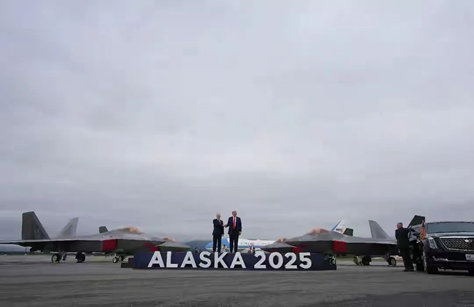
Second, the F-22 fighter jet display at Elmendorf Air Base on the day of the meeting was essentially an “unarmed show,” and the deterrent gestures on both sides of the red carpet were merely formal;
Third, the sudden decrease in shelling on the Donbas front line confirms that the “strike to promote talks” strategy has entered its substantive phase.
These signs suggest that energy cooperation and the “unraveling” of the Ukrainian situation may have been achieved earlier than publicly stated.
The surface narrative of US-Russia relations is full of confrontation: the US declassified Russian surveillance technology, and Russia responded with nuclear exercises.
But the underlying logic remains transactional—there is room for exchange on core issues such as Ukrainian territory, energy exports, and NATO expansion. Former US Ambassador to Russia McFaul once noted, “Creating crises before summits is a common tactic for raising the price.”
As “showy confrontation” becomes standard practice in great power competition, the international community must be even more vigilant: Which are the true red lines, and which are merely bargaining chips?
This document leak may be a tacit double act orchestrated by the US and Russia.