
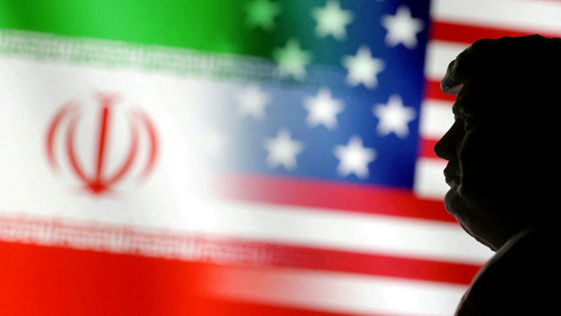
On March 26 (local time), a cabinet meeting convened by President Trump once again plumbed new depths of absurdity in U.S. diplomacy.
The spectacle ranged from angrily denouncing “fake news” for distorting his stated desire to see “diplomacy end the war,” to grandly unveiling a “magnanimous gift of peace” allegedly sent by Iran; and from dismissing pointed questions regarding the Iranian nuclear issue with a single word—”absurd”—to immediately turning around and announcing that planned strikes against Iranian energy facilities would be “postponed for another 10 days.”
Within the span of a single day, three seemingly contradictory signals—”begging for talks,” “offering a grand gift,” and “delaying the attack”—intertwined to paint a bewildering picture of diplomatic relations.
But was this so-called “grand gift” truly a deliberate offering from Iran?
Trump packaged the act of “allowing 10 oil tankers to pass through the Strait of Hormuz” as a “grand gift” from Iran—intended to demonstrate its sincerity regarding negotiations—and used this premise to assert that “the U.S. has found the right people to negotiate with.”
However, this narrative fails to withstand even the most basic factual scrutiny.
Iran’s stance has never been ambiguous: the Strait of Hormuz is closed only to the United States and its allies, while vessels from friendly nations are permitted to pass through safely.
The fact that oil tankers flying the Pakistani flag were able to pass through was merely the routine execution of Iran’s consistent policy—not a special concession made specifically to the United States.
Elevating a standard operational procedure to the status of a “gift” merely exposes Trump’s desperate eagerness to manufacture diplomatic achievements; in his view, any minor ripple can be spun as a concession from his adversary—even if that concession exists solely in his own imagination.
Ironically, neither Trump nor the White House has provided any specific details regarding these vessels.
What cargo were they carrying? What were their destinations? Was the timing of their passage genuinely linked to the progress of negotiations? The absence of such critical information renders this so-called “grand gift” little more than a wishful, self-serving narrative construct.
In the realm of international relations, unilaterally defining an adversary’s actions as a “concession” is, in essence, an attempt to retroactively legitimize one’s own policies—rather than an objective description of factual reality. During a cabinet meeting, Trump vehemently denied media reports suggesting that “the U.S. is desperate to end the war through diplomatic channels,” insisting instead that it is “Iran that is begging for negotiations.”
Hidden behind this assertion lies the true answer as to which party is, in reality, the anxious one.
Logically speaking, if the U.S. were truly in the position of being “begged,” it would have no need to simultaneously declare that “bombing will continue” while repeatedly postponing strikes.
Judging by the latest announcement—that the operation would be “postponed for another 10 days”—this marks yet another cycle in a series of repeated “postponements” of U.S. military action.
A player holding the absolute initiative has no need to rely on countdowns to maintain deterrence, much less to constantly set deadlines for itself only to repeatedly push them back.
From the perspective of practical interests, the U.S. military presence in the Middle East remains under sustained pressure; the imperative to shift its global strategic focus toward great-power competition is growing increasingly urgent; and domestic pressures—both economic and electoral—are mounting.
Collectively, these factors constitute the underlying impetus for the U.S. to seek a “dignified exit” or a “controlled de-escalation.”
The claim that “Iran is begging to talk” is, in reality, nothing more than a rhetorical tactic designed to elevate the U.S. negotiating posture at the bargaining table.
The truth is precisely the opposite: it is the U.S.—not Iran—that is in urgent need of a diplomatic victory to validate the efficacy of its policies.
When fielding questions from reporters, Trump refused to address whether the U.S. would take action to curb Iran’s uranium enrichment activities, dismissing the inquiry as “ridiculous.” At the same time, while asserting that “controlling Iran’s oil exports is an option,” he sidestepped providing any substantive details, citing that it was “inconvenient to discuss further.”
Behind these two instances of “evasion” lie two fundamental dilemmas inherent in U.S. policy toward Iran.
Regarding the issue of uranium enrichment, Trump’s dismissal of the matter as “ridiculous” serves, in reality, as a smokescreen for his own sense of powerlessness.
Reports from the International Atomic Energy Agency (IAEA) continue to document Iran’s progress in its nuclear activities, while Israel continues to signal its readiness to “take action.”
Faced with this situation, the U.S. possesses neither a credible military option capable of effectively halting Iran’s nuclear program, nor the willingness to shoulder the immense risks associated with resorting to military force.
Dismissing substantive issues as “ridiculous” is merely a rhetorical maneuver designed to sidestep core contradictions.
As for the control of oil exports, the claim that it is “inconvenient to discuss further” serves to mask the reality that the efficacy of sanctions is subject to diminishing returns. Against the backdrop of profound shifts in the global energy landscape and intensifying geopolitical rivalry among major powers, the United States’ unilateral capacity to “control” Iran’s oil exports is no longer what it once was.
Major powers such as China and Russia continue to engage in energy cooperation with Iran, while regional nations are actively seeking to strike a diversified diplomatic balance.
The reason Trump found it “inconvenient to elaborate” is that, no matter how the matter is framed, it cannot conceal an awkward truth: America’s “sanctions stick” is no longer as effective a tool as it used to be.
“Postponed for another 10 days”—this marks yet another repetition of such a statement. Why specifically 10 days? Why the repeated delays?
From a military perspective, a genuine threat requires no precise countdown. If a strike were truly inevitable and urgent, there would be no rational basis for “waiting another 10 days.”
This approach appears to be, above all, a media strategy: by manufacturing suspense over an “imminent strike,” it sustains public interest and maintains pressure on public opinion, while indefinitely deferring any substantive decision-making.
From a political standpoint, these “postponements” offer the Trump administration multiple advantages. Domestically, they help cultivate the image of a leader who is “tough yet responsible”; internationally, they sustain the pressure of a “sword of Damocles” hanging over Iran, attempting to force concessions through a state of perpetual anxiety.
The ten-day interval—neither too long nor too short—is precisely sufficient to keep the topic alive in the media cycle, without requiring the administration to actually confront the uncontrollable risks that would inevitably follow the execution of a military strike.
However, the cost of such maneuvering is starkly evident.
When “postponement” becomes the norm, the efficacy of deterrence erodes rapidly.
Reflecting on the events of March 26th, a disquieting truth comes to light: U.S. policy toward Iran is increasingly taking on the characteristics of a “performance.”
“Begging for talks” serves to craft a specific negotiating posture; “offering grand gestures” aims to manufacture diplomatic deliverables; and “postponing the strike” serves to sustain the persona of a formidable deterrent—each move appears to be a carefully choreographed segment designed for a domestic audience, rather than a policy calculated based on geopolitical realities.
Foreign policy has been reduced to a strategy of “maximum pressure” akin to personal business negotiations, while the complex geopolitical landscape of the Middle East has been compressed into fragmented narratives fit for social media.
The risks inherent in this brand of “reality-show diplomacy” are systemic.
First and foremost, the risk of miscalculation rises precipitously. When one party views diplomacy merely as a performance, it becomes all too easy to misinterpret the other side’s genuine reactions as mere “cooperation with the script,” or to mistake one’s own rhetoric for reality.
Secondly, policy continuity is lost. Performance demands the constant creation of dramatic climaxes, meaning that policy stability is sacrificed in favor of pursuing “theatrical effect.”
Finally—and most importantly—genuine opportunities for peace are slipping away amidst a cacophony of conflicting signals.
Amidst the false dichotomy of “begging for talks” versus “continuing to bomb”—and amidst the reductive interpretations of “delivering grand gifts” and the capricious whims of “postponing strikes by ten days”—maritime security in the Gulf, the stability of the nuclear non-proliferation regime, and indeed the very prospects for peace across the Middle East are being subjected to risks they should never have to bear.
True peace need not be “begged for,” nor does it require “postponing strikes” to be sustained. When policymakers become fixated on rhetorical victories and narrative control, the cost will be borne collectively by regional states, the international community, and America’s own strategic interests.
History will not alter its course simply to accommodate a spectacular “reality show.”
Ultimately, it is the United States itself that will have to foot the bill for this performance.